Through decades of collaboration, a Manhattanville professor and alum are advancing critical research on sea turtle rehabilitation, migration, and conservation.
For Dr. Wendy McFarlane, science has always been driven by a fascination with how animals adapt, survive, and thrive in challenging environments. That curiosity has taken her from Canada to the Caribbean, from studying migrating fish to helping rehabilitate endangered sea turtles, and has shaped a career dedicated to research, teaching, and conservation.
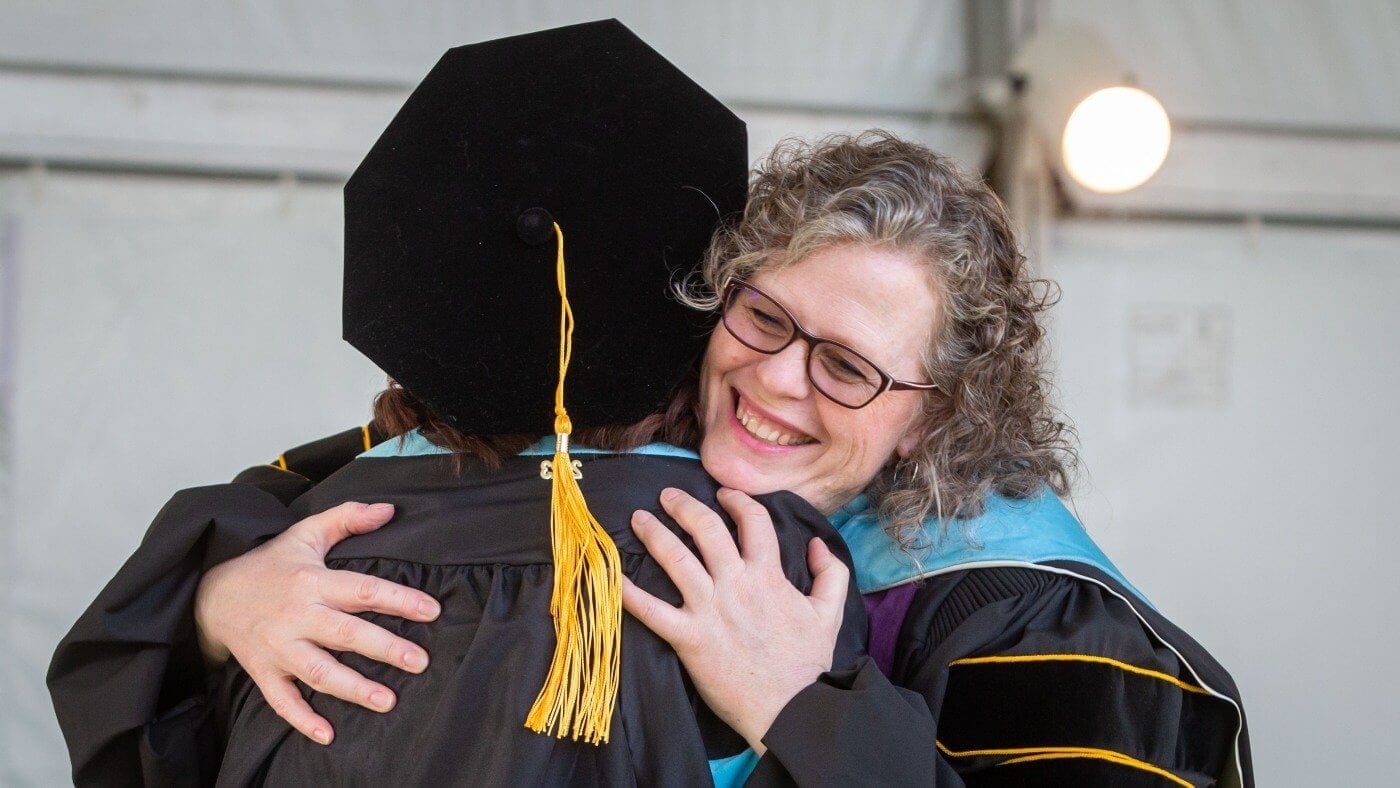
Raised and educated in Canada, McFarlane earned a Bachelor of Science in Marine Biology and a Ph.D. in Fish Physiology before joining the faculty at 麻豆直播 in 2004. Over the past two decades, she has introduced students to the excitement of scientific discovery through hands-on research and experiential learning. In addition to teaching undergraduate biology courses, she mentors student researchers studying a wide range of organisms, from jellyfish and spiders to marine mammals and sea turtles.
Today, the bulk of McFarlane's research is focused on endangered sea turtles, a passion that began through an unexpected opportunity on the Caribbean island of Barbuda.
Working alongside fellow Manhattanville faculty member Dr. Nancy Todd, professor of biology and chair of the environmental studies program, McFarlane helped develop a field course that immersed students in the island's unique ecosystems while launching a research program focused on Barbuda's biodiversity. Among the many species they studied were sea turtles that nest and forage in the island's coastal waters.
"Initially, I was drawn to the turtles because they were such an important part of Barbuda's ecosystem," McFarlane said. "The more I learned about them, the more interested I became in understanding the challenges they face and how science can support conservation efforts."
The experience proved transformative, not only for McFarlane's research interests but also for one of her students.
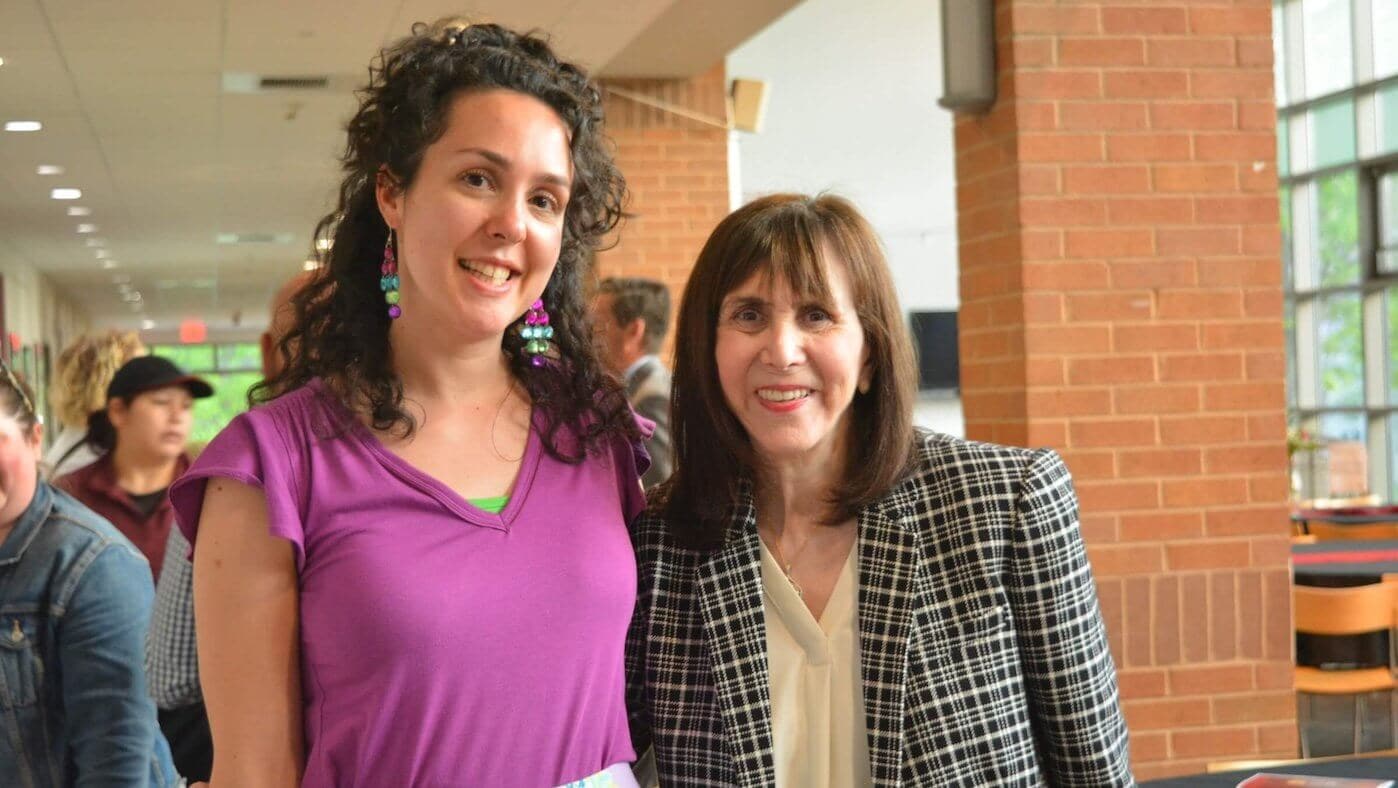
Among the students participating in Manhattanville's hands-on research opportunities was Maxine Montello '08, who designed her own major in animal behavior and quickly developed a passion for marine conservation. What began as a faculty-student mentorship evolved into a long-term professional collaboration that continues today.
After graduating from Manhattanville, Montello built a career in wildlife conservation and eventually became Executive Director of the New York Marine Rescue Center (NYMRC), New York State's primary facility for the rescue and rehabilitation of marine wildlife, including sea turtles and seals.
More than two decades after first meeting in McFarlane's classroom, professor and alum now work together to address one of the most pressing conservation challenges facing sea turtles in the Northeast.
Since 2017, McFarlane has volunteered as a visiting scientist with NYMRC, applying her expertise in marine biology and animal physiology to better understand the effects of cold-stunning, a potentially life-threatening condition that occurs when sea turtles are exposed to rapidly declining water temperatures.
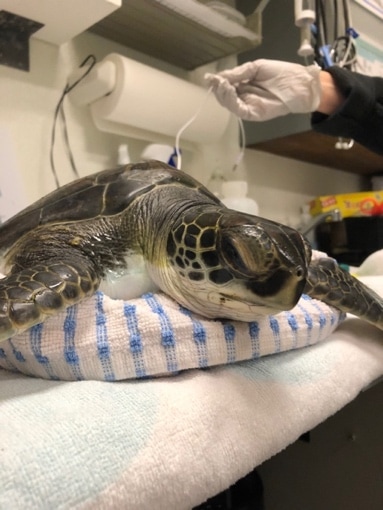
Each year, juvenile sea turtles travel north to feed in the productive waters off New York and New England. As temperatures begin to drop in autumn, they typically migrate south. Some turtles, however, remain in northern waters too long and become trapped when temperatures fall rapidly. The resulting condition can leave them weak, unable to swim or dive normally, and vulnerable to illness, injury, and stranding.
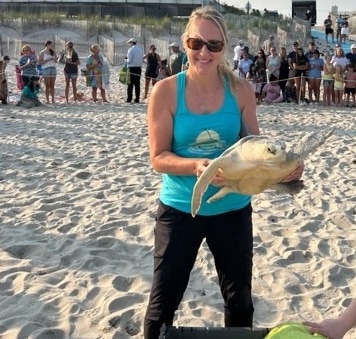
At NYMRC, rescued turtles receive extensive medical care and rehabilitation before being released back into the wild. McFarlane's research helps scientists and veterinarians better understand the physiological impacts of cold-stunning and recovery, examining how these animals respond to stress, treatment, and rehabilitation. Her background in fish physiology has provided a unique perspective on the project.
"My research has always focused on how animals respond to environmental stress," McFarlane said. "Working with the rescue center has allowed me to apply that knowledge in a way that directly contributes to the conservation and recovery of endangered species."
A particularly exciting aspect of the work involves tracking turtles after their release. McFarlane has been fortunate to participate in the ongoing satellite-tagging program for rehabilitated sea turtles that stranded on New York beaches. By equipping turtles with satellite transmitters, researchers can follow their movements, migration patterns, and survival after release.
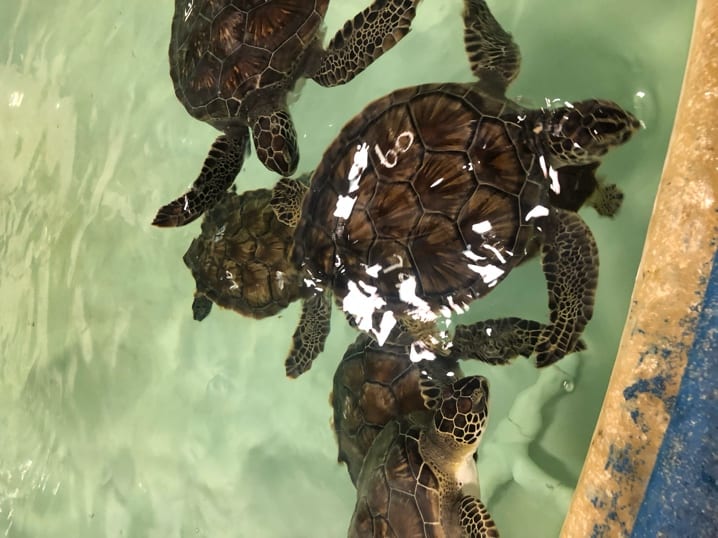
The data provide valuable insights into whether rehabilitated turtles successfully return to normal behaviors and help conservationists improve rehabilitation and release strategies. The tracking program also offers a rare glimpse into the journeys these animals undertake after leaving the care of wildlife professionals.
From the beaches of Barbuda to the campus of Manhattanville and the shores of Long Island, McFarlane’s work demonstrates how mentorship, curiosity, and collaboration can create lasting impact, both in the classroom and far beyond it.